It’s Tick Season: Be Aware

“[Emergency room] visits to treat tick bites are at their highest in almost a decade.”
Centers for Disease Control and Prevention, April 24, 2026
“A survey conducted in 28 US states found that, despite awareness of Lyme disease and a high prevalence of outdoor activities that raise the risk of exposure to the ticks that carry Lyme bacteria, less than half of respondents took measures to prevent infection."
Chris Dahl, CIDRAP, October 22, 2025
Tick-borne infections are soaring due, in large part, to climate change. Ticks benefit from warmer temperatures and more moisture; both their breeding habitat and season are expanded because of climate change. And as ticks spread, so do the diseases they carry.
This year in the U.S., ticks and the diseases they carry are off to an alarmingly vigorous start. According to the Centers for Disease Control and Prevention’s (CDC) Tick Bite Data Tracker, out of every 100,000 emergency department visits during the fourth week of April, 114 were for a tick bite—the highest rate for this time of year since 2017.
Lack of awareness fuels many tick-borne infections including, but not limited to, Lyme disease. As May is National Lyme Disease Awareness Month, it seemed like a good time to review Lyme disease and several of the other most worrisome tick-borne infections.

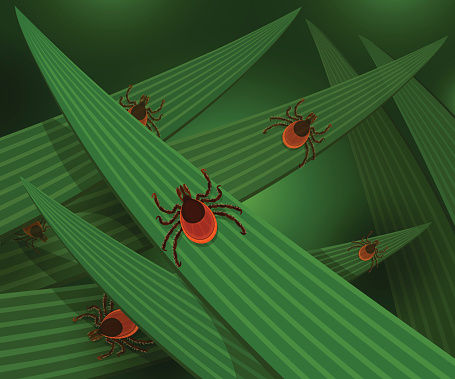
What are the most common tick species and what infectious agents do they transmit (a recap)? When they are taking a blood meal (biting you), infected ticks transmit microbes that can cause 15 or so infectious diseases. In the Northeast and Upper Midwest, the Ixodes scapularis tick (deer tick) is the chief evil doer. The deer tick transmits seven different pathogens that cause disease including what are known as the “Big Three”—Lyme disease, anaplasmosis, and babesiosis.
Lyme disease, caused by the Borrelia burgdorferi bacterium, is by far the most common vector-borne disease in this country. Symptoms of the disease usually appear 3-30 days after a tick bite and include fever, headache, fatigue, muscle and joint pain, swollen lymph nodes and, in 70-80% of the patients, a “bulls-eye” rash (erythema migrans). The CDC reported over 89,000 cases of Lyme disease in 2023, but there’s evidence the real number is much greater, approaching 500,000 cases per year.
Anaplasmosis is the second most common deer-tick transmitted disease. The anaplasma microbe (Anaplasma phagocytophilum) is a bacterium that infects white blood cells and causes a systemic illness in about 5,000 to 6,000 people per year. The symptoms of the disease usually begin 1-2 weeks after the tick bite and include a sudden high fever, chills, shaking, muscular aches and pains and extreme fatigue. The antibiotic doxycycline is highly effecting in treating anaplasmosis as well as Lyme disease, both of which are bacterial infections.
The third most common deer-tick transmitted disease is babesiosis caused by the parasite Babesia microti. This parasite infects red blood cells and can cause a number of clinical symptoms including high fever, soaking sweats, severe fatigue, headache, and muscle and joint pain. The symptoms usually appear 1-4 weeks after the tick bite. About 2,000 to 3,000 cases of babesiosis are reported to the CDC each year.
Of the “Big Three” tick-borne infections, babesiosis is the most serious with a mortality rate of 1% to 3% in those with a normal immune system. (The figure jumps to as high as 20% for people who are immunocompromised.) Babesiosis is treated with antimicrobial medications, most commonly a combination of atovaquone and azithromycin. Exchange red blood cell transfusion is used, however, to treat severe cases of babesiosis.
Of the other deer tick-borne diseases, Powassan virus disease is of greatest concern. Powassan virus is a tickborne flavivirus that is related to some mosquito-borne viruses such as West Nile Virus. Transmission of the virus from the tick to the human can occur within 15 minutes. Symptoms of the disease include fever, headache, vomiting and, in severe cases, inflammation of the brain (encephalitis) and of membranes surrounding the spinal cord (meningitis). The disease kills approximately 10% to 15% of its victims. There is no specific medication to treat this disease and patients with severe illness may need supportive care such as hospitalization and respiratory support. Fortunately, Powassan virus disease is rare (about 60 cases a year), but unfortunately, it’s increasing.

Amblyomma americanum, the Lone Star tick, is the tick species other than Ixodes scapularis that deserves mentioning. Bites of this tick can cause Alpha-gal syndrome (AGS), a serious, potentially life-threatening allergic reaction to a sugar molecule (galactose-alpha-1,3-galactose) that is naturally produced in the bodies of most mammals but not in humans. It is also found in the saliva of the Lone Star tick.
When it bites, this tick can transfer alpha-gal from its saliva into a person’s blood. The immune system can then identify alpha-gal as a threat and trigger an allergic reaction. Symptoms occur after a person eats red meat or other products made from mammals—often 2–6 hours after ingestion—and include hives, stomach issues, and anaphylaxis (shock). Because of this, AGS is also known as the tick bite meat allergy or red meat allergy.
The CDC estimates more than 110,000 AGS suspected cases were identified between 2010 and 2022, but the true number is likely higher due to underdiagnosis and lack of mandatory reporting. (Lack of awareness by primary care physicians has been a common issue, but is now a diminishing problem.)
Prevention of tick-borne infections; protection is key. Currently, there are no vaccines available to prevent any of the tick-borne infections. Thus, the best way to protect yourself and your family from these tick-borne diseases is to do all you can to prevent tick bites.
The CDC advises:
Minimize time spent in the woods or tall grass
If you go into the woods, wear light-colored long pants and a long-sleeve shirt, tuck your pant cuffs into your socks
Wear topical tick repellent on your skin and/or pesticides on clothing
Perform thorough tick checks of your body after spending time in high-risk areas
Shower soon after coming inside
Keep your yard free of brush or wood piles
Use tick repellent on pets
Treat your yard with tick sprays
Remove ticks embedded in skin as soon as possible, preferably with tweezers
The University of Rhode Island (URI) is an outstanding resource on everything you might want to know about ticks and the management of tick-borne infections. Its “URI Tick Encounters Field Guide,” https://web.uri.edu/tickencounter/fieldguide/, provides guidelines on how to remove ticks and identify tick species. It also provides up-to-date information about the clinical aspects, including treatment, of each of the tick-borne diseases. And in its “Tick Finder Tool,” you’ll find information about tick activity in different regions of the country should you want to discover what ticks you might encounter before travelling to one of their habitats.
A vaccine to prevent Lyme disease? While I don’t always succeed, I try to end each of my posts on a positive note. The good news here is that a vaccine to prevent Lyme disease may be on the horizon.
In late March 2026, Pfizer and Valneva announced that their experimental Lyme disease vaccine, PF-07307405 (LB6V), demonstrated more than 70% efficacy in a pivotal Phase 3 trial. (Bergeson, L., “Lyme disease vaccine shows 70% efficacy in phase 3 trial, CIDRAP, March 24, 2026).
The vaccine is quite clever in that it targets the outer surface protein of B. burgdorferi (OspA). When a person is vaccinated with LB6V, the body creates antibodies that are ingested by the tick as it feeds on the vaccinated person. When the antibodies bind to OspA, they prevent the bacteria from leaving the tick and entering the bloodstream.
While the Pfizer/Valneva vaccine technically missed its primary statistical goal due to a lower-than-expected number of cases, the companies described the results as "clinically meaningful" and are seeking regulatory approval by the Food and Drug Administration.
There has been no human Lyme vaccine since LYMErix. (LYMErix was withdrawn from the market in 2002 due to low demand and controversy—unproven safety issues.) Therefore, approval of the Pfizer/Valneva Lyme disease vaccine would be a major shift toward preventing a disease resulting in ~476,000 U.S. cases/year. I hope it happens.


I recently visited a Rhode Island pain management center and was very pleased with the experience. The team was professional, welcoming, and took the time to listen carefully to my concerns. I appreciated that the healthcare professionals explained the available options clearly and answered all of my questions. The entire appointment felt organised and comfortable, and I’m very satisfied with the quality of care I received. https://paincenterofri.com/